
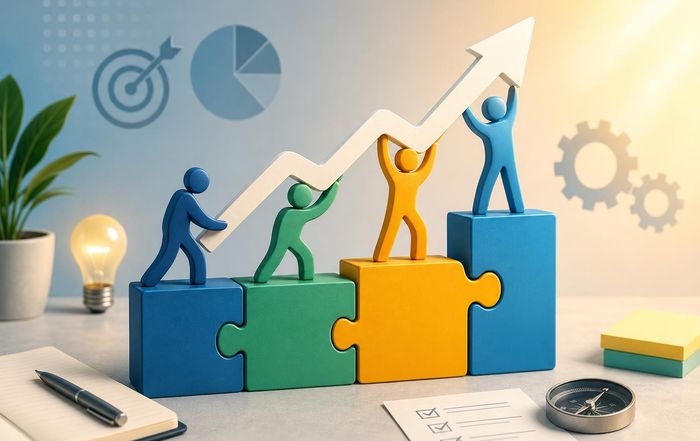
Productivity Methods for High-Performing Teams
High-performing teams are rarely the result of raw talent alone; they emerge where disciplined productivity methods, thoughtful leadership, and a culture of continuous improvement intersect. As organizations across North America, Europe, and Asia accelerate digital transformation and hybrid work models, the most successful teams are those that combine proven frameworks with a strong sense of purpose and psychological safety, turning productivity into a sustainable competitive advantage rather than a short-lived sprint.
This article explores how modern teams are operationalizing productivity at scale, drawing on research from leading institutions, practices observed in high-growth companies, and the lived experience of leaders whose stories regularly feature on BusinessReadr. It is designed as a practical guide for executives, founders, and managers who want to help their teams perform at a consistently high level without burning out.
Rethinking Productivity: From Individual Output to System Performance
For decades, productivity was framed primarily as an individual trait, often reduced to time management tactics and personal discipline. However, research from organizations such as McKinsey & Company and the Harvard Business School has increasingly emphasized that team and organizational systems exert a far more powerful influence on performance than individual habits alone. Studies on high-performing organizations show that clear goals, well-defined roles, and streamlined workflows correlate strongly with higher output and better employee engagement, while ad-hoc processes and unclear expectations are associated with waste, rework, and attrition.
In this context, productivity methods are best understood as system-level practices that align leadership, management, and execution. Rather than asking only how each person can do more, high-performing teams ask how the environment can make it easier to do the right work, in the right way, at the right time. People who regularly explore leadership insights online will recognize this as a shift from heroic individualism to scalable, repeatable excellence supported by structured leadership practices.
The Foundation: Clarity of Purpose, Priorities, and Roles
The most powerful productivity method is deceptively simple: radical clarity. Teams that know exactly why they exist, what success looks like, and who is responsible for what tend to outperform those that do not, even when the latter have more resources or advanced tools.
Research from Gallup consistently shows that employees who strongly agree they know what is expected of them are significantly more likely to be engaged and productive. Similarly, MIT Sloan Management Review has highlighted that clear, well-communicated strategy is a hallmark of digitally mature and high-performing organizations. Leaders who translate strategy into concrete, measurable objectives give teams a stable foundation on which to apply more specialized productivity methods.
Clarity operates at several levels. At the organizational level, it means a concise strategic narrative and a limited set of priorities that cascade into team objectives, which aligns closely with the strategic disciplines discussed in BusinessReadr's strategy resources. At the team level, it means unambiguous ownership of outcomes, explicit decision rights, and documented workflows. At the individual level, it involves well-defined responsibilities, performance expectations, and feedback loops. Without this alignment, even sophisticated frameworks such as OKRs or agile rituals can devolve into ceremony without impact.
Objectives and Key Results (OKRs): Aligning Ambition and Execution
Among contemporary productivity frameworks, Objectives and Key Results (OKRs) have become one of the most widely adopted methods for aligning teams around ambitious goals. Popularized by Intel and later by Google, and now used by companies ranging from startups to large enterprises, OKRs provide a structured way to translate strategy into action while encouraging focus and transparency.
An Objective describes a qualitative, inspiring goal, while Key Results define specific, measurable outcomes that indicate progress toward that goal. Many organizations set OKRs on a quarterly cadence, with company-level objectives cascading into team-level and sometimes individual OKRs. Resources from Google's re:Work archive and the book "Measure What Matters" have helped standardize good practice, and case studies published by Harvard Business Review and Strategy+Business show that when implemented thoughtfully, OKRs can improve alignment, cross-functional collaboration, and accountability.
For high-performing teams, the power of OKRs lies less in the template and more in the conversations they provoke. Teams that regularly review Key Results, discuss obstacles, and adjust plans based on evidence develop a culture of disciplined execution. Leaders who combine OKRs with strong management fundamentals, such as those covered in BusinessReadr's management insights, are better able to prevent goal overload and ensure that OKRs remain a focusing tool rather than an administrative burden.
Agile Ways of Working: Iteration, Feedback, and Flow
Agile methodologies, originally developed for software development, have expanded into marketing, operations, and even finance. Frameworks such as Scrum and Kanban, documented by organizations like the Scrum Alliance and Kanban University, offer structured practices for breaking work into smaller increments, prioritizing continuously, and improving through regular reflection. Reports from VersionOne and Digital.ai on the State of Agile indicate that agile adoption continues to spread across industries and functions, particularly in hybrid and remote settings.
In Scrum, teams work in fixed-length sprints, conduct planning and review sessions, and hold daily stand-ups to synchronize. Kanban focuses on visualizing work, limiting work in progress, and optimizing flow. High-performing teams often blend elements of both, using a Kanban board to manage tasks while maintaining a cadence of planning and retrospective meetings. By limiting the amount of work in progress, teams reduce context switching, which American Psychological Association research has shown to be a major drag on cognitive performance and perceived productivity.
Agile is most effective when paired with a mindset of continuous improvement rather than rigid adherence to rituals. Teams that regularly inspect their process, experiment with changes, and measure outcomes build resilience and adaptability. This iterative approach aligns with the innovation-oriented thinking explored in BusinessReadr's innovation coverage, where experimentation and learning are treated as core productivity drivers rather than optional extras.
Deep Work and Focus: Protecting Cognitive Capacity
In a world of constant digital distraction, the ability of teams to protect deep, focused work has become a critical differentiator. Research by Gloria Mark at the University of California, Irvine, and studies published in Nature Human Behaviour have documented the costs of frequent interruptions and multitasking, including increased stress and reduced quality of output. High-performing teams respond by designing their environment to minimize unnecessary context switching and by establishing norms that respect focus.
One widely referenced concept is "deep work," popularized by Cal Newport and discussed in outlets such as The New York Times and The Economist, which refers to cognitively demanding tasks performed in a state of distraction-free concentration. Teams that schedule blocks of time for deep work, limit meetings during these periods, and use asynchronous communication tools effectively often report higher quality deliverables and faster problem solving.
Organizations are increasingly experimenting with meeting-light days, structured "focus sprints," and clearer communication protocols. For example, some teams adopt explicit expectations around response times in chat tools, reducing the perceived need for immediate replies. Others use shared calendars to signal focus periods. These practices complement the individual productivity techniques many readers explore through BusinessReadr's productivity articles, but their real power emerges when they are institutionalized as team norms rather than left to personal preference.
High-Trust Communication: Psychological Safety as a Productivity Engine
Multiple large-scale studies have confirmed that psychological safety-the belief that one can speak up with ideas, questions, or mistakes without fear of punishment-is a critical ingredient of high-performing teams. Google's Project Aristotle, summarized by re:Work and analyzed by Harvard Business Review, identified psychological safety as the single most important factor distinguishing effective teams. Similar findings have been reported by Amy Edmondson of Harvard Business School, whose research shows that teams with high psychological safety make fewer preventable errors and learn faster.
From a productivity standpoint, psychological safety reduces the hidden costs of silence, rework, and slow decision-making. When team members feel safe to share early drafts, raise risks, or admit uncertainty, issues are surfaced sooner and resolved more efficiently. Trust also enables more candid prioritization discussions, allowing teams to say no to low-value work without fear of reprisal.
High-performing teams invest in communication rituals that reinforce safety and connection. Practices such as regular one-on-ones, structured retrospectives, and open forums for questions help normalize constructive dissent and feedback. Leaders who model vulnerability, admit their own mistakes, and actively solicit input create conditions in which productivity methods such as OKRs or agile ceremonies can operate at full strength. This leadership behavior is deeply aligned with the perspectives shared in BusinessReadr's mindset section, where growth-oriented thinking and humility are treated as core business capabilities.
Data-Informed Workflows: Using Metrics Without Losing Humanity
As collaboration platforms and project management tools have proliferated, teams have gained unprecedented visibility into work patterns, cycle times, and output. Platforms like Atlassian Jira, Asana, and Microsoft Teams provide analytics on task completion, response times, and collaboration networks. Reports from Microsoft's Work Trend Index and Slack's Future of Work research highlight both the opportunities and the risks of this data: used thoughtfully, it can illuminate bottlenecks and guide process improvements; used punitively, it can erode trust and encourage gaming of metrics.
High-performing teams tend to adopt a small set of meaningful metrics rather than tracking everything. Examples include lead time from idea to delivery, percentage of time spent on planned versus unplanned work, and the ratio of maker time (deep work) to meeting time. Leaders then use these metrics as conversation starters rather than verdicts, asking what might explain a pattern and what experiments could improve it. This approach mirrors the evidence-based decision-making frameworks discussed in BusinessReadr's decisions content, where data informs judgment rather than replacing it.
Ethical considerations are increasingly important as well. Guidance from organizations such as the OECD and World Economic Forum emphasizes the need for transparency in how productivity data is collected and used, as well as the importance of avoiding surveillance practices that undermine autonomy and dignity. Teams that openly discuss what is being measured, why, and how it will benefit them are better positioned to harness analytics for collective gain.
Cross-Functional Collaboration: Breaking Silos to Accelerate Value
Many of the most impactful productivity gains occur not within teams, but between them. Silos, misaligned incentives, and handoff delays can negate the benefits of even the most efficient individual units. Research from Deloitte and Accenture on high-performing organizations consistently highlights cross-functional collaboration as a key differentiator, particularly in complex, customer-facing environments.
Methods such as cross-functional squads, product-based teams, and end-to-end ownership structures are increasingly common. These models bring together people from engineering, design, marketing, sales, and operations to own a shared outcome, such as a product line or customer segment. By co-locating decision-making authority with the work, organizations reduce the need for slow, hierarchical approvals and enable faster, more integrated problem solving. This structural shift aligns with the entrepreneurial thinking discussed in BusinessReadr's entrepreneurship resources, where teams operate more like internal startups with clear mandates and autonomy.
Tools and platforms that support cross-functional visibility-such as shared roadmaps, unified CRMs, and integrated analytics-further enhance productivity by ensuring that teams work from a common set of facts. However, technology alone is insufficient; leaders must also align incentives and recognition systems so that collaboration, rather than local optimization, is rewarded.
Energy Management and Sustainable High Performance
The most forward-thinking organizations recognize that sustained productivity is fundamentally a function of energy, not just time. Research by The Energy Project, studies in Harvard Business Review, and work by health organizations such as the World Health Organization and Centers for Disease Control and Prevention have all highlighted the links between well-being, cognitive performance, and long-term organizational outcomes. Burnout, classified by the WHO as an occupational phenomenon, is associated with reduced productivity, higher turnover, and increased error rates.
High-performing teams therefore treat rest, recovery, and workload management as strategic priorities rather than perks. Practices such as reasonable working hours, protected vacations, and access to mental health resources are increasingly recognized as productivity methods in their own right. Some organizations are experimenting with four-day workweeks or seasonal slowdowns, often reporting maintained or even improved output, as documented in pilot studies covered by BBC Worklife and The Guardian. While results vary by industry and context, the broader lesson is that teams perform best when they are energized, not exhausted.
At the team level, leaders can monitor workload distribution, encourage micro-breaks during intensive work, and normalize conversations about capacity. This emphasis on sustainable performance aligns closely with the growth-oriented frameworks outlined in BusinessReadr's growth content, which emphasize compounding progress over short-term spikes.
Learning Loops: Retrospectives, After-Action Reviews, and Knowledge Sharing
Continuous learning is one of the most underappreciated productivity methods. Teams that systematically capture lessons from projects, experiments, and even failures can improve their processes, avoid repeating mistakes, and accelerate onboarding for new members. The concept of after-action reviews, widely used by organizations such as the U.S. Army and later adopted in corporate settings, has been documented in publications by Harvard Business Review and the Center for Creative Leadership as an effective mechanism for institutional learning.
Agile retrospectives, which occur at the end of each sprint or project phase, serve a similar function. In these sessions, teams reflect on what went well, what did not, and what they will change next time. High-performing teams go beyond anecdotal discussion, using data, customer feedback, and concrete examples to ground their insights. They then document agreed-upon changes and follow up in subsequent cycles to assess impact.
Knowledge sharing platforms, internal wikis, and communities of practice further enhance productivity by making expertise discoverable across the organization. Instead of solving the same problem repeatedly in different corners of the company, teams can build on each other's work. This approach is closely aligned with the development-oriented perspective found in BusinessReadr's development section, where skills, capabilities, and institutional memory are treated as strategic assets.
Leadership Behaviors that Unlock Team Productivity
No productivity method can compensate for poor leadership. Conversely, even modest process improvements can yield outsized benefits when leaders create the conditions for high performance. Research from McKinsey, Boston Consulting Group, and Chartered Management Institute in the UK all point to a common set of leadership behaviors that correlate with productive, engaged teams: setting a compelling vision, providing clarity and support, empowering decision-making, and role-modeling desired behaviors.
Leaders who are explicit about priorities help teams focus on what matters most and reduce the cognitive load of constant reprioritization. Those who invest in coaching and feedback enable individuals to grow into more capable contributors, amplifying the effectiveness of any productivity method in place. Importantly, leaders who demonstrate consistency between words and actions build trust, which in turn encourages the open communication and risk-taking that underpin innovation and continuous improvement.
On BusinessReadr, many leadership case studies highlight how seemingly small behavioral shifts-such as publicly blocking time for deep work, turning cameras off in certain meetings to reduce fatigue, or acknowledging when a process is not working-can legitimize similar practices across the team. In this way, leadership becomes a multiplier of productivity methods rather than a separate domain.
Adapting Methods to Culture, Context, and Geography
Organizations operating across regions such as the United States, Europe, and Asia must also navigate cultural and regulatory differences when applying productivity methods. Research from Hofstede Insights, INSEAD, and London Business School shows that attitudes toward hierarchy, uncertainty, and work-life boundaries vary significantly across countries, influencing how practices such as agile ceremonies, feedback norms, or flexible work arrangements are perceived.
For example, in cultures with higher power distance, team members may be less inclined to speak openly in retrospectives unless leaders actively create space and model vulnerability. In regions with strong labor protections or specific working time regulations, certain scheduling practices may require adaptation. High-performing global teams acknowledge these nuances and co-create local versions of productivity methods that respect both corporate standards and local realities.
This adaptability is particularly important in an era of distributed work, where teams in Singapore, Germany, Brazil, and Canada may collaborate on the same project. Clear documentation, asynchronous communication norms, and sensitivity to time zones become essential components of the productivity toolkit, complementing the more universal practices described above.
The Role of BusinessReadr in Advancing Team Productivity
As organizations continue to refine how they work, BusinessReadr serves as a platform where leaders, managers, and entrepreneurs can explore emerging methods, real-world case studies, and evidence-based insights. Articles across its sections-from leadership and management to productivity, strategy, and growth-offer practical tools and reflective perspectives that help readers adapt global best practices to their unique contexts.
By curating research from institutions such as Harvard Business School, MIT Sloan, McKinsey & Company, and international organizations, and by highlighting positive, inspirational examples of teams that have transformed how they work, BusinessReadr aims to make high performance more accessible and sustainable. Readers can explore broader business trends that shape the future of work, including technological innovation, demographic shifts, and evolving expectations around well-being, through the platform's central hub at BusinessReadr.com.
Toward a More Human, High-Performing Future
Thanks for following the story all the way through. In the current decade, the most productive teams are not those that push people to their limits, but those that design systems in which excellence becomes the natural outcome of clear goals, thoughtful processes, and supportive cultures. Methods such as OKRs, agile workflows, deep work practices, high-trust communication, data-informed decision-making, and continuous learning provide a robust toolkit, but their effectiveness ultimately depends on the quality of leadership and the willingness of teams to adapt and improve.
As organizations across the United States, Europe, Asia, and beyond navigate uncertainty and opportunity, the teams that thrive will be those that treat productivity not as a pressure to do more at any cost, but as an invitation to work smarter, together, in ways that honor human energy and potential. Through ongoing exploration, experimentation, and shared learning-supported by daily edited sites like this and by trusted global research institutions-high-performing teams can continue to raise the standard of what is possible in modern work. There is always another subject worth exploring and another perspective worth considering, see you tomorrow!
